
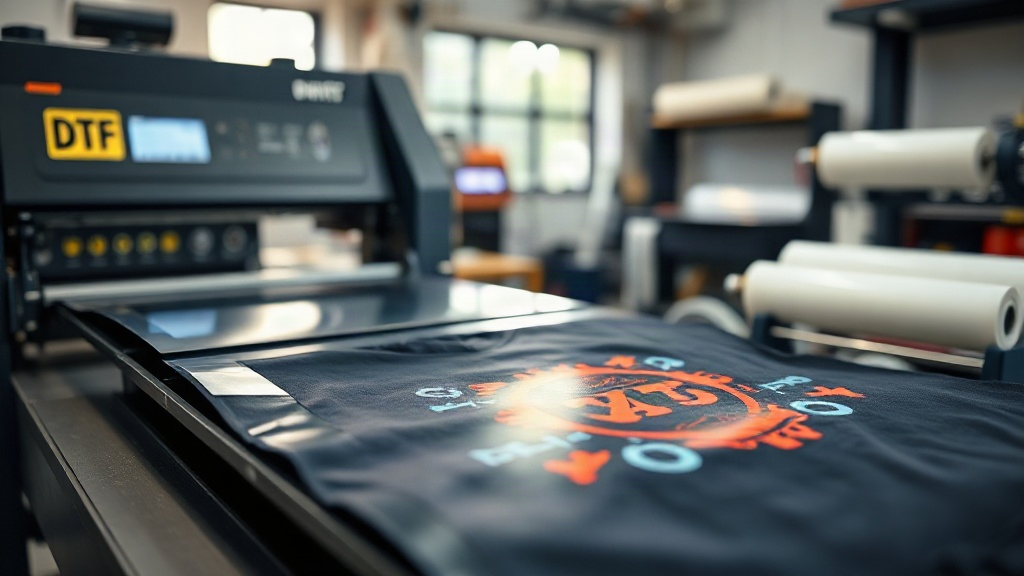
When you sell custom apparel through print on demand, the print method you choose can make or break your brand. Customers expect vibrant colors, lasting quality, and designs that feel as good as they look. Among the many options, DTF printing has emerged as a game-changer for sellers who want versatility without sacrificing durability. Unlike traditional methods that lock you into specific fabrics, DTF opens up a world of possibilities, from cotton tees to polyester blends and even canvas totes. If you have been searching for a way to stand out in a crowded market, understanding DTF printing could be your secret weapon.
What Exactly Is DTF Printing?
DTF stands for Direct to Film. It is a printing technique where your design is printed onto a special film, coated with a powder adhesive, and then heat-pressed onto the fabric. Think of it as a transfer method, but with far more precision and durability than the old iron-on sheets you might remember. The process starts with a digital printer that lays down CMYK inks plus white ink onto a PET film. The white ink acts as a base, allowing the colors to pop on both light and dark garments. After printing, a fine thermoplastic powder is applied to the wet ink, and the film is cured. When you are ready to apply it, you place the film on your substrate and press it with a heat press. The adhesive melts, bonding the design permanently to the fabric. Once cooled, you peel away the film, leaving a soft, stretchable print that moves with the garment.
Why DTF Printing Is a Game-Changer for Print on Demand
Print on demand is all about efficiency and flexibility. You do not hold inventory; you print as orders come in. DTF fits perfectly into this model because it requires no minimums, no screens, and no color limitations. But the advantages go deeper.
Unmatched Fabric Versatility
One of the biggest headaches in print on demand is matching the right printing method to the right fabric. Screen printing works best on cotton, sublimation demands polyester, and vinyl can be tricky on stretchy materials. DTF sidesteps all that. It adheres beautifully to cotton, polyester, blends, spandex, nylon, leather, and even non-textile items like wood or metal. This means you can offer the same design on a 100% cotton t-shirt, a polyester performance hoodie, and a canvas bag without changing your process. For sellers who want to expand their product range, this versatility is invaluable.
Vibrant Colors and Fine Details
Because DTF uses white ink as a base, your colors remain vivid even on dark fabrics. Gradients, photographs, and intricate linework reproduce with stunning accuracy. Unlike heat transfer vinyl, which requires layering and can feel heavy, DTF prints are thin and flexible. They stretch with the fabric without cracking, so your customers get a premium feel that lasts wash after wash.
Cost-Effective for Small Businesses
Setting up a DTF printing operation is more affordable than you might think. A decent DTF printer costs a fraction of a screen printing setup, and you do not need a separate room for screens or chemicals. The supplies, film, powder, and ink, are consumables that scale with your order volume. For print on demand sellers who want to produce in-house or work with a supplier, DTF offers a low barrier to entry with high profit potential.
How DTF Compares to Other Printing Methods
To appreciate DTF, it helps to see how it stacks up against the competition.
- Screen Printing: Great for large orders on cotton, but expensive for small batches and limited to one design per screen. DTF wins for one-offs and multi-color designs.
- Direct to Garment (DTG): Best for 100% cotton, but can be inconsistent on blends and often requires pre-treatment. DTF handles more fabrics with less prep.
- Sublimation: Only works on polyester and requires white or light fabrics. DTF works on any color and material.
- Heat Transfer Vinyl (HTV): Good for simple shapes and text, but layering multiple colors is time-consuming and can feel bulky. DTF transfers full-color designs in one press.
For print on demand, where orders are typically small and varied, DTF offers the best balance of quality, speed, and flexibility.
Getting Started with DTF Printing: A Step-by-Step Overview
If you are ready to explore DTF, here is what the workflow looks like from start to finish.
- Design Preparation: Create your artwork in a vector or high-resolution raster format. Remember to mirror the image before printing, as you will flip it during transfer.
- Printing: Load the PET film into your DTF printer. The printer lays down CMYK and white ink. Some printers have a separate white ink channel; others use a single printhead. Ensure your printer is calibrated for optimal ink density.
- Powder Application: While the ink is still wet, sprinkle the thermoplastic powder evenly over the film. Shake off the excess. A powder shaker machine can automate this step for consistency.
- Curing: Place the film in a curing oven or under a heat press for a short time to melt the powder. This creates a flexible adhesive layer.
- Transfer: Set your heat press to the recommended temperature (usually around 160°C or 320°F) and pressure. Press the film onto the garment for 10-15 seconds.
- Peel: Wait for the film to cool completely (cold peel) or peel while warm (hot peel), depending on the film type. Cold peel generally yields a smoother finish.
Each step has variables that affect the final result, so testing and note-taking are your friends.
Expert Tips for Flawless DTF Transfers
Even with a solid understanding, small mistakes can ruin a print. Here are practical tips I have gathered from experienced DTF users.
Master Your Heat Press Settings
Temperature, pressure, and time are critical. Too little heat and the adhesive won't bond; too much and you'll scorch the fabric or get a dull finish. Invest in a heat press with accurate temperature control and a pressure gauge. Always test with a scrap garment before pressing a customer order.
Choose the Right Film and Powder
Not all DTF films are created equal. Cheaper films may curl or leave residue. Look for films designed for cold peel, as they tend to provide a softer hand feel. Similarly, use high-quality TPU powder that melts evenly. The particle size matters: finer powder gives a smoother finish.
Store Your Prints Properly
If you print in advance, store the cured films in a cool, dry place away from direct sunlight. Humidity can cause the powder to clump, and dust can ruin the adhesive. A sealed bag or container works well.
Wash Care Instructions for Customers
To ensure longevity, advise your customers to wash garments inside out in cold water and tumble dry low. Avoid fabric softener and ironing directly on the print. Providing these instructions shows professionalism and reduces complaints.
Common Challenges and How to Overcome Them
Like any printing method, DTF has its quirks. Here are a few common issues and their solutions.
- Ink Cracking: Usually caused by insufficient powder or under-curing. Increase powder coverage and ensure the curing temperature is correct.
- Poor Adhesion: If the print peels after washing, the pressure during transfer might be too low, or the fabric may have a coating (like water repellent). Pre-press the garment to remove moisture and wrinkles.
- Color Fading: Use high-quality inks and avoid over-curing, which can degrade pigments. Also, ensure the white ink layer is thick enough to support the colors.
- Film Sticking: If the film sticks to the garment after peeling, it's likely a hot peel film being peeled too soon or too late. Follow the manufacturer's instructions and experiment with cooling time.
Keeping a log of your settings and results will help you troubleshoot quickly.
Is DTF Printing Right for Your Print on Demand Business?
If you offer a diverse range of products, from t-shirts and hoodies to tote bags and hats, DTF is likely a strong fit. It shines for small batches, complex designs, and fabrics that other methods struggle with. However, if you specialize in high-volume runs of a single design on cotton, screen printing might still be more cost-effective per unit. Many successful sellers use a hybrid approach: DTF for samples, small orders, and specialty items, and screen printing for bulk orders. Assess your product mix and order patterns to decide where DTF fits best.
Frequently Asked Questions About DTF Printing
What fabrics can I use with DTF printing?
DTF works on almost any fabric, including cotton, polyester, blends, spandex, nylon, leather, and even non-woven materials. It is one of the most versatile printing methods available.
How durable is a DTF print?
When applied correctly, DTF prints are highly durable. They can withstand dozens of washes without cracking, peeling, or fading. Proper washing inside out in cold water extends the life significantly.
Do I need a special printer for DTF?
Yes, you need a DTF printer that uses pigment inks and has a white ink channel. Some users convert standard inkjet printers, but dedicated DTF printers offer better reliability and output quality.
Can I use DTF on dark garments?
Absolutely. The white ink layer in DTF printing acts as a base, allowing colors to appear vibrant on dark fabrics. This is a major advantage over methods like sublimation, which require light-colored polyester.
Is DTF printing cost-effective for small orders?
Yes, DTF is very cost-effective for small orders because there are no setup fees or minimums. You can print one-offs as easily as a hundred pieces, making it ideal for print on demand.
Final Thoughts
DTF printing is not just a trend; it is a robust solution that addresses many pain points in the print on demand world. Its ability to produce vibrant, durable prints on a wide range of materials without breaking the bank makes it a valuable tool for any seller. Whether you are just starting out or looking to expand your offerings, adding DTF to your production arsenal can set your brand apart. Take the time to learn the nuances, invest in quality supplies, and practice. Your customers will notice the difference, and your business will reap the rewards.