
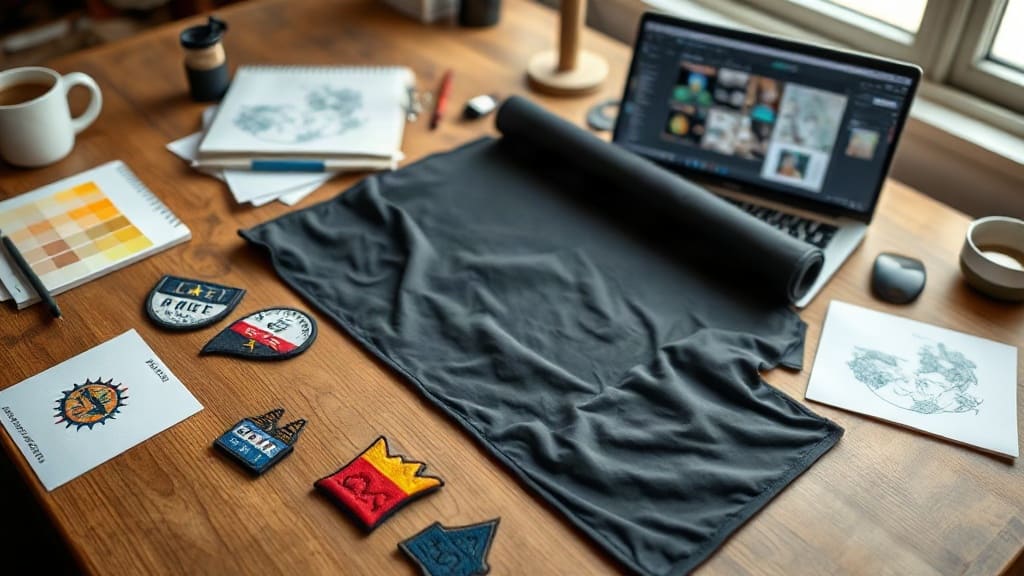
In the rapidly evolving world of e-commerce, print on demand has emerged as a game-changer for entrepreneurs and established brands alike. This fulfillment model allows you to create products only when a customer orders them, eliminating the need for upfront inventory and reducing risk. Among the most popular POD items are custom patches and custom banners. These versatile products offer a unique way to showcase your brand, commemorate events, or simply add a personal touch to everyday items. Whether you're a small business owner looking to expand your product line or a marketing manager seeking innovative promotional tools, understanding how to leverage print on demand for patches and banners can set you apart. In this guide, we'll explore the ins and outs of designing, producing, and marketing these items, with actionable insights to help you succeed in 2026 and beyond.
Why Print on Demand for Custom Patches and Banners?
The print on demand model has revolutionized how creators bring products to market. For custom patches and custom banners, the advantages are particularly compelling. First, there's no minimum order quantity, meaning you can offer a wide variety of designs without committing to bulk inventory. This is ideal for testing new designs or catering to niche audiences. Second, production is typically faster because these items are often made using digital printing or embroidery techniques that can be quickly scaled. Third, the risk of unsold stock is virtually eliminated, as each item is produced only after a sale. This allows you to focus on marketing and design rather than logistics. Additionally, the quality of POD patches and banners has improved significantly, with many suppliers offering durable materials and vibrant colors that rival traditional manufacturing. As we move into 2026, we can expect even more advanced printing technologies and sustainable material options, making POD an increasingly attractive choice for eco-conscious consumers.
Cost Efficiency and Scalability
One of the primary reasons entrepreneurs turn to print on demand is cost efficiency. Traditional manufacturing requires upfront investment in tooling, materials, and labor, which can be prohibitive for small businesses. With POD, you pay only for what you sell, and the production cost is typically included in the retail price. This pay-as-you-go model means you can start with a limited budget and scale as demand grows. For custom patches, this means you can offer embroidered, woven, or printed patches in small batches, testing which designs resonate with your audience. Similarly, custom banners can be produced in various sizes and materials without the need for bulk orders. This scalability is perfect for seasonal promotions, event marketing, or limited-edition collections. Moreover, as your business grows, you can negotiate better rates with your POD supplier, further improving your margins.
Design Freedom and Customization
Another significant advantage of POD is the freedom it offers in design. Unlike traditional manufacturing, where complex designs might incur extra costs or require specialized techniques, POD platforms often support full-color printing and intricate details without additional charges. This opens up a world of possibilities for custom patches, from photorealistic images to detailed logos and text. For custom banners, you can experiment with gradients, patterns, and high-resolution graphics that would be costly to produce otherwise. Furthermore, POD allows for easy customization on a per-order basis. For example, you could offer personalized patches with a customer's name or a unique design for each event. This level of customization is a powerful selling point, especially in markets like sports teams, clubs, and corporate branding, where individuality matters.
Designing Custom Patches That Stand Out
When it comes to custom patches, the design is everything. A well-designed patch can convey your brand's identity, commemorate a special achievement, or simply look cool on a jacket. But with so many options, how do you create a patch that truly stands out? Start by considering the purpose. Is it for a uniform, a fashion statement, or a promotional giveaway? The intended use will guide your choices regarding size, shape, colors, and materials. Next, think about the level of detail. Embroidered patches are classic and durable but may not capture fine gradients or tiny text. Woven patches offer more detail and are lighter, while printed patches allow for full-color complexity. If you're using a print on demand service, check their capabilities and material options. Many POD suppliers offer a range of backing options, such as iron-on, sew-on, or Velcro, which can affect the patch's application and durability. Finally, don't forget the importance of a clear, legible design. Avoid overly complex elements that might get lost in production. A simple, bold design often works best.
Choosing the Right Materials and Techniques
The material and technique you choose for your custom patches will impact their appearance, durability, and cost. Here's a quick breakdown of common options:
- Embroidered: Classic look, very durable, best for simple designs with solid colors. Ideal for uniforms and outdoor gear.
- Woven: Finer detail than embroidery, lightweight, good for complex logos and text. Often used for fashion and special events.
- Printed: Full-color, photorealistic, great for detailed artwork. Less durable than embroidered but suitable for temporary or decorative use.
- PVC/Rubber: 3D effect, waterproof, modern look. Popular for tactical gear and outdoor brands.
When working with a print on demand supplier, ask for samples to evaluate quality before committing to a large order. Also, consider the backing: iron-on is convenient for customers, while sew-on is more secure for heavy use. Velcro backing allows for easy swapping, which is great for morale patches. Each choice has trade-offs, so align them with your target audience's needs.
Creating Effective Custom Banners for Events and Marketing
Custom banners are a staple of event marketing, trade shows, and retail displays. They're highly visible, versatile, and can be produced quickly through print on demand. But to maximize their impact, you need to design them with purpose. First, determine the banner's location and viewing distance. A banner for a trade show booth will need different text sizes and graphics than one for a storefront window. Use high-contrast colors and large, readable fonts for key messages. Remember that banners are often viewed from a distance, so simplicity is key. Avoid clutter and focus on one main message or call to action. Next, consider the material. Vinyl is durable and weather-resistant, making it ideal for outdoor use. Fabric banners offer a premium look and are wrinkle-resistant, perfect for indoor events. Mesh banners allow wind to pass through, reducing stress on the material, which is great for fences and large outdoor displays. With POD, you can order banners in various sizes without minimums, so you can create specific banners for different events or seasons.
Design Tips for High-Impact Banners
To ensure your custom banners grab attention, follow these design principles:
- Keep it simple: Focus on one key message. Too much information overwhelms viewers.
- Use bold colors: Contrast is crucial. Ensure text stands out against the background.
- Choose readable fonts: Sans-serif fonts are generally easier to read from a distance.
- Include a call to action: Tell viewers what to do next, whether it's visiting your website or scanning a QR code.
- Optimize for the medium: For outdoor banners, use weather-resistant materials and UV-resistant inks.
Additionally, consider the banner's shape and size. Vertical banners (like roll-ups) are great for tight spaces, while horizontal banners work well for wide displays. With print on demand, you can easily order a test banner to see how your design translates to the final product before committing to a larger run.
Marketing Your Custom Patches and Banners
Once you have your products, the next step is getting them into the hands of customers. Marketing custom patches and custom banners requires a targeted approach. For patches, consider niche communities such as hobbyist groups, sports teams, and military enthusiasts. Social media platforms like Instagram and Pinterest are visual goldmines for patch designs. Share high-quality photos of your patches on jackets, bags, and hats to show them in context. Collaborate with influencers or micro-influencers who align with your brand to reach a wider audience. For banners, focus on B2B marketing. Trade shows, conferences, and local events are prime opportunities to showcase your banner designs. Offer special discounts for bulk orders or custom designs to attract businesses. Additionally, use email marketing to reach out to event planners and retail managers. Remember to highlight the benefits of print on demand, such as no minimums and fast turnaround, which can be a deciding factor for many buyers.
Leveraging Print on Demand Platforms for Growth
To streamline your operations, integrate with a reliable print on demand platform that offers patches and banners. Many platforms connect directly to your e-commerce store, automating order fulfillment and shipping. This allows you to focus on design and marketing. When choosing a platform, consider factors like product quality, production times, shipping options, and customer service. Some platforms specialize in certain products, so you might need to use multiple suppliers for patches and banners. However, using a single platform can simplify logistics. As you grow, you can negotiate better pricing and access exclusive features. In 2026, expect to see more POD platforms offering eco-friendly materials and advanced customization tools, such as augmented reality previews, which can enhance the customer experience.
Frequently Asked Questions
What is the typical turnaround time for print on demand custom patches?
Turnaround times vary by supplier, but most print on demand services produce custom patches within 3-7 business days after order placement. Shipping time depends on the destination and shipping method chosen. Some suppliers offer rush production for an additional fee. It's always best to check the specific supplier's production and shipping estimates before placing an order, especially if you have a deadline.
Can I order just one custom banner with print on demand?
Yes, one of the biggest advantages of print on demand is the ability to order single items. Most POD suppliers have no minimum order quantity, so you can order just one custom banner for a personal event or a small business. This makes it perfect for testing designs or for one-off occasions.
How do I ensure my custom patches are durable?
Durability depends on the materials and techniques used. Embroidered patches are generally the most durable, followed by woven and then printed. To extend the life of your custom patches, choose appropriate backing (sew-on for heavy use) and advise customers on proper care, such as washing garments inside out and avoiding high heat. When ordering from a POD supplier, ask about their quality standards and request samples if possible.
What file format should I use for custom banner designs?
For best results, provide vector files (like AI, EPS, or PDF) for custom banners. Vector files can be scaled without losing quality, which is essential for large banners. If you only have raster images (like JPG or PNG), ensure they are high resolution (at least 150 DPI at full size). Most POD platforms provide design guidelines and templates to help you prepare your files correctly.
Is print on demand a sustainable option for patches and banners?
POD can be more sustainable than traditional manufacturing because it reduces overproduction and waste. However, the sustainability of the final product depends on the materials used. Look for suppliers that offer organic cotton, recycled polyester, or eco-friendly inks. Some POD platforms now highlight their sustainable options, so you can align your brand with environmentally conscious practices. As demand for eco-friendly products grows, more suppliers are expected to adopt greener methods.