
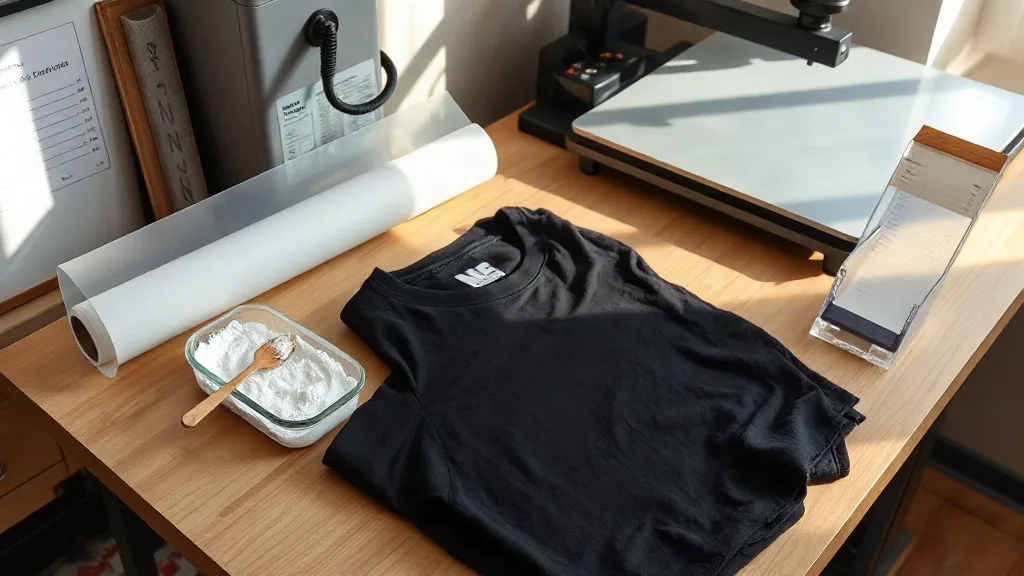
Walk into a small print shop these days and there is a decent chance you will spot a roll of PET film and a jar of adhesive powder sitting next to the heat press. DTF transfers have moved from a niche workaround to a daily production method for shops that need full-color prints without the setup costs of screen printing or the fabric restrictions of sublimation. If you are weighing whether to add them to your workflow, this guide walks through what actually matters: how the process works, which materials behave well, how to press without ruining garments, and how to decide between printing in-house versus ordering finished transfers.
What a DTF Transfer Actually Is
Direct-to-film printing is a two-stage process. First, a printer lays down a mirror-image design in water-based pigment inks onto a coated PET film. Then the wet ink is dusted with a thermoplastic adhesive powder, shaken off, and cured under heat. The result is a flexible, stretchy transfer that can be stored flat or rolled and pressed onto a garment whenever an order comes in.
The part people underestimate is the powder. It is not a decorative finish; it is the adhesive layer that bonds ink to fabric. A shop that skimps on curing the powder will get transfers that crack at the edges after a few washes, no matter how good the printer is. Get the cure right and the print feels soft, stretches with the shirt, and survives dozens of laundry cycles.
Compared with weeding vinyl, the labor profile is completely different. There is no cutting, no weeding, no transfer tape. You print, powder, cure, and press. For a one-person operation, that labor saving often matters more than the per-unit material cost. If you want to see how the finished product looks before committing to equipment, ordering a sample run of dtf transfers from a service bureau is the fastest way to judge print quality and hand feel.
Where DTF Fits and Where It Does Not
DTF handles cotton, blends, polyester, canvas, and even some nylon without pretreatment, which is its biggest practical advantage over sublimation. Sublimation needs high polyester content and light-colored fabric; DTF does not care much about either. That flexibility is why so many shops use dtf as their default for mixed orders: a batch of cotton tees, a few poly hoodies, and a canvas tote can all run through the same press.
Strong use cases
- Full-color designs with gradients, photographic detail, or many colors
- Small batch and one-off orders where screen setup costs make no sense
- Team jerseys, event shirts, and fundraiser runs with varied garment types
- Dark garments, where the white ink layer does the heavy lifting
Weaker use cases
- Very high-volume single-design runs, where screen printing wins on unit cost
- Garments with heavy texture, deep zippers, or thick seams in the print area
- Items that will be washed at high heat or dry-cleaned aggressively
- Nylon and coated fabrics that need a lower press temperature and careful testing
A realistic shop keeps two or three decoration methods and routes jobs to whichever one fits. DTF is usually the flexible middle option, not a replacement for everything.
Film, Powder, and Ink: What to Look For
Transfer quality starts with the film. Cheaper films can wrinkle during printing, curl at the edges, or release poorly during pressing. Double-sided coated film costs a bit more but tends to feed more reliably and release cleaner, which saves far more in reprints than it costs per sheet.
Powder comes in fine and coarse grades. Fine powder gives a softer hand and better detail on small text; coarse powder bonds more aggressively and can suit heavy fabrics. Most shops settle on a fine-to-medium grade and adjust cure temperature rather than switching powders constantly.
Ink matters most for white coverage. White pigment ink is dense and settles quickly, so agitation and regular maintenance are not optional. A printer that sits idle for a week will need a purge and possibly a head cleaning before the first job. Budget for that time honestly; it is the most common reason people get frustrated with in-house film printing.
Pressing Without Ruining the Garment
Every press behaves slightly differently, so treat these as starting points and test on scrap fabric first.
- Pre-press the garment for a few seconds to remove moisture. Skipping this causes steam bubbles under the transfer.
- Place the transfer cold-peel side up and press at roughly 150 to 160 degrees Celsius for 10 to 15 seconds with medium pressure.
- Peel according to the film type. Cold peel films need to cool completely; warm peel films come off while still warm. Mixing this up is the single most common cause of a failed press.
- Post-press with a cover sheet for another 5 to 10 seconds. This sets the adhesive into the fabric and improves wash durability noticeably.
Two small habits pay off. Keep a silicone or Teflon cover sheet on hand so the press platen stays clean, and log your settings per fabric type. After a few weeks you will have a reliable reference instead of guessing every time a new garment shows up.
In-House Printing vs Ordering Finished Transfers
The economics depend on volume and how much of your week you want to spend on maintenance. A printer plus powder station plus curing oven is a real capital outlay, and pigment ink printers need regular attention to stay healthy. If you print a few hundred transfers a month, in-house can pay for itself. If you print thirty, it usually will not.
Ordering finished transfers flips the tradeoff. You trade some margin for zero equipment risk, no ink waste, and the ability to offer the service immediately. Many shops start by ordering transfers, learn which designs and fabrics sell, then invest in equipment once the demand is proven. When customers ask about dtf transfers near me, the honest answer is often that a local or online transfer supplier can have gang sheets in your hands within days.
A quick cost sanity check
Work out three numbers before deciding: your average transfer size in square inches, your monthly transfer count, and your labor cost per hour. Divide the equipment and consumable cost by monthly output to get a true per-transfer figure, then compare it with a supplier quote including shipping. Shops are frequently surprised that at low volume, ordering wins even after shipping, while at steady volume the gap closes fast.
Common Mistakes That Cost Real Money
The failures tend to repeat. Under-curing powder produces transfers that look fine on day one and peel after three washes. Pressing over seams or zippers creates uneven pressure and partial adhesion. Storing transfers in a humid room softens the powder and causes clumping. Reusing a cover sheet that has picked up ink residue transfers that residue onto the next garment.
There is also a design trap. Very thin lines and tiny text below about six points often lose definition because the powder layer adds bulk. Bumping up line weights slightly before printing saves a lot of reprints, and it is a fix you can make in minutes at the design stage.
Frequently Asked Questions
How long do DTF transfers last after washing?
With a proper cure and post-press, most transfers hold up through 40 to 60 home laundry cycles when washed inside out in cold or warm water. High-heat drying is the main thing that shortens their life.
Can I press DTF onto 100 percent cotton?
Yes, cotton is one of the easiest fabrics for DTF. The adhesive bonds well without pretreatment, which is a big part of why the method is popular for everyday tees.
Do I need a special heat press for DTF?
A standard clamshell or swing-away heat press works fine as long as it holds consistent temperature and pressure. The main requirement is even pressure across the platen, not a DTF-specific machine.
Can DTF transfers be applied to already-printed garments?
They can, but the existing print area needs to be flat and fully cured. Pressing over a raised screen print or vinyl usually leads to poor adhesion around the edges.
How should transfers be stored before use?
Keep them flat or loosely rolled in a cool, dry place away from direct sunlight. Sealing them in a bag with a desiccant pack helps in humid climates and prevents the powder from softening.